
Travel story 9 min read
MyTravelBuddy Stories
A Slow Blue Morning in Chefchaouen
A gentle Chefchaouen walking story through the blue medina, kasbah, Ras El Ma, and the Spanish Mosque viewpoint, with room for beauty and respect.
Chefchaouen is easy to reduce to a color.
That is the first mistake.
The blue is real, of course. It gathers on steps, doorframes, shutters, arches, and walls in a hundred different shades: powder, sky, indigo, chalky turquoise, a blue so pale it almost becomes weather. In morning light, the medina can feel less painted than cooled, as if the Rif Mountains have lowered their shade into the streets.
But Chefchaouen is not a backdrop. It is a working mountain town in northern Morocco, close enough to Tangier and Tetouan to fit into a northern itinerary, far enough into the hills to ask for a slower pace. People live behind the famous doors. Children go to school. Shopkeepers open shutters. Neighbors carry bread, laundry, water, and news through alleys that visitors sometimes mistake for a photo studio.
The better way to meet Chefchaouen is gently.
Start early. Walk without trying to collect every blue corner. Let the medina reveal itself as a place of thresholds: a lane that bends, a cat in a patch of sun, woven blankets hanging beside a stairway, the smell of bread and mint tea, a glimpse of the mountains at the end of an alley. Save the big viewpoint for later. Give the morning to the town at ground level.
Begin Where the Town Opens
Plaza Uta el Hammam is the practical center of the old town, and it makes a good first anchor because Chefchaouen's medina is not organized for straight-line efficiency. The square sits beside the kasbah and the Grand Mosque, with cafes around the edges and lanes pulling away in several directions.
Arrive before the day gets too loud if you can. Order coffee or mint tea, then resist the urge to turn breakfast into a production. Watch the town arrange itself. Tables scrape. Doors lift. Guides look for clients. Travelers compare plans. The kasbah walls hold one side of the square with a quiet authority that reminds you Chefchaouen was never only decorative.
Founded in the 15th century, Chefchaouen sits in the Rif Mountains of northern Morocco. Its old town grew as a fortified mountain settlement, and the kasbah still gives the center a grounded shape. If the kasbah museum and garden are open, step inside for a little context before losing yourself in the lanes. If hours, tickets, or access have changed, let the exterior do enough work: earth-colored walls, blue streets around them, mountains close by.
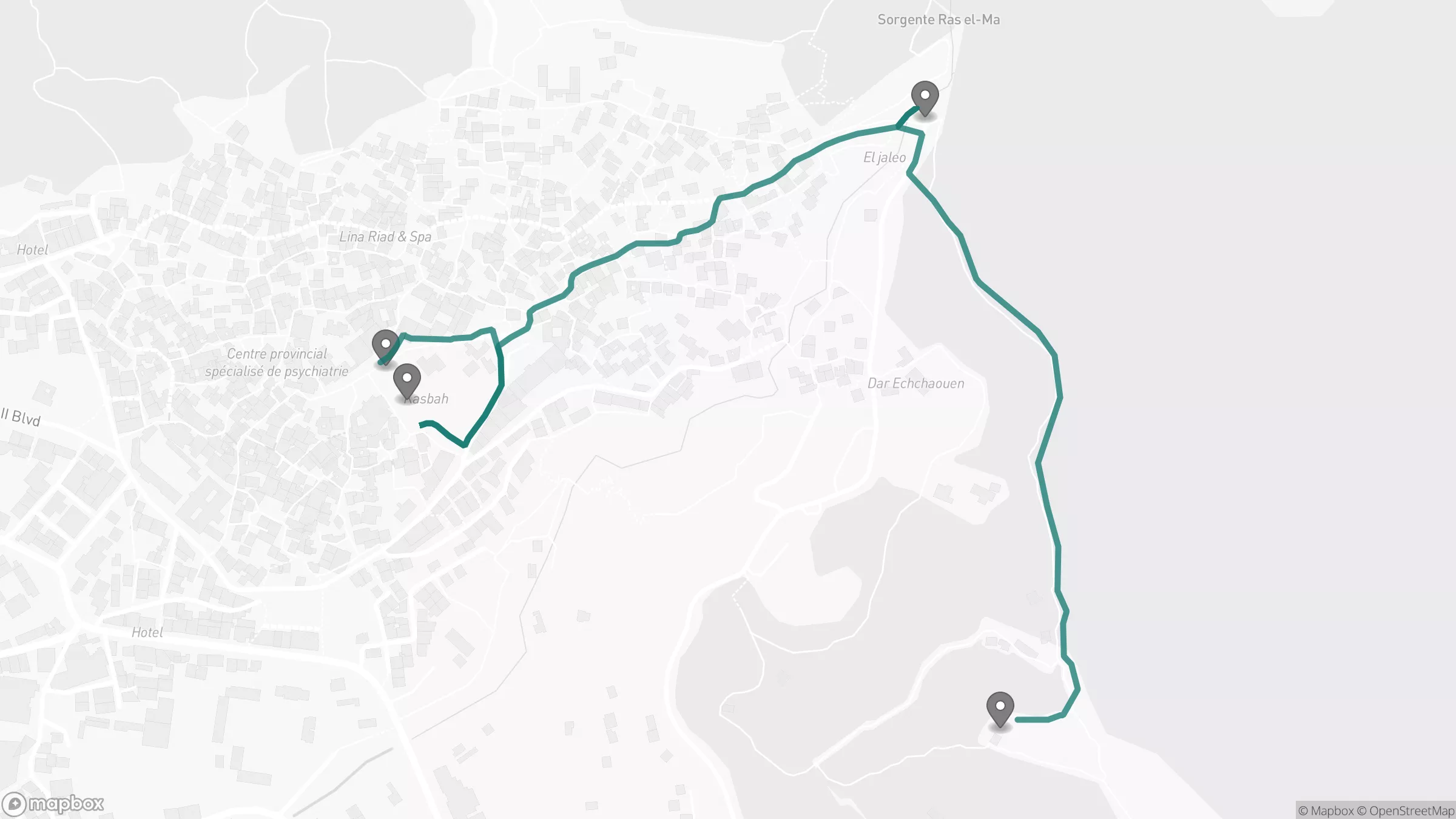
This is a good place to make the day small on purpose. You do not need a full checklist. A slow Chefchaouen walk can be simple: plaza, kasbah, medina lanes, craft shops, Ras El Ma, then the hillside path toward the Spanish Mosque viewpoint near sunset.
The route is short on a map. The point is to make it long in memory.
Let the Medina Be Lived In
From the plaza, choose an uphill lane and walk as if you are visiting someone's neighborhood, because you are.
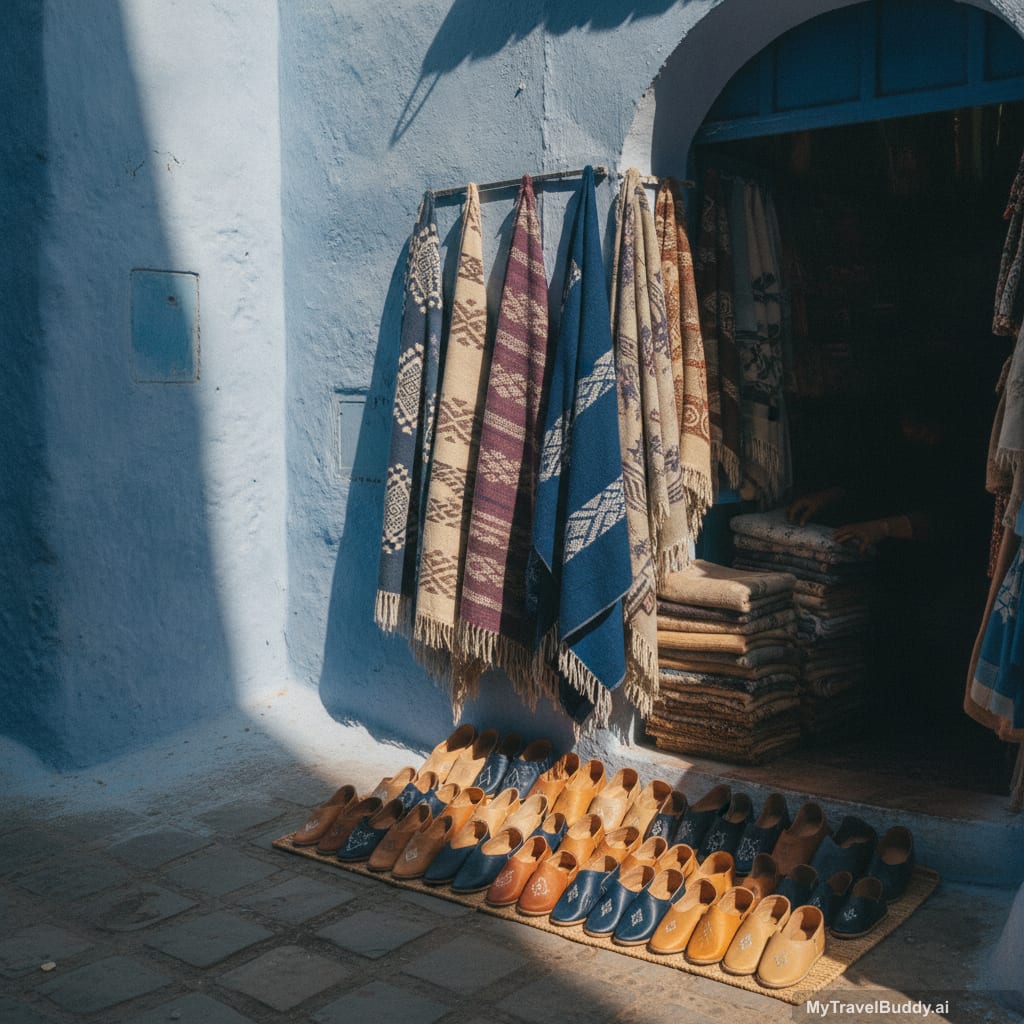
Chefchaouen's blue-painted medina is beautiful in the obvious way, but its best details are often practical: a step worn down in the middle, a shopkeeper straightening leather slippers, a small cascade of woven textiles, a bucket tucked under a fountain, a door left open just long enough to show an inner courtyard shadow. The blue makes everything photogenic. The discipline is remembering that not everything photogenic belongs to you.
Photograph public lanes, textures, wide street scenes, and shopfronts where it feels welcome. Be careful around homes, private doorways, laundry, children, and anyone praying, working, resting, or trying to get through the morning. Ask before close portraits. Buy something if you spend real time with a craft seller. Keep your bag close in narrow passages, not because the medina is a problem, but because narrow spaces ask for bodily awareness.
This is where Chefchaouen starts to become more than a color. The medina teaches pace. Stairs slow you down. Turns keep you humble. A lane you thought was quiet becomes a path for three people, a basket, and a scooter. Your perfect composition becomes someone else's front step.
Let that be part of the story.
Pause for Tea Before the Climb
By late morning, the medina will probably have asked more of your legs than the distance suggests. Chefchaouen is compact, but compact does not mean flat. This is a town of stairways and slopes, and it rewards travelers who build in pauses before they are needed.
Find a cafe terrace or a shaded table near the old town and let the day soften. Mint tea belongs naturally here, but so does orange juice, water, or a simple lunch if the morning stretched longer than planned. Keep claims about specific cafes flexible; small places open, close, change names, and shift hours. The useful advice is less about one perfect table and more about timing: pause before the light gets harsh and before the route toward Ras El Ma begins to feel like a task.
A travel companion like MyTravelBuddy is helpful in exactly this quiet way. Not to over-plan Chefchaouen, but to hold the route, the weather, the walking time, and the small saved discoveries in the background while you decide whether you want one more lane, one more tea, or a longer rest before the viewpoint.
The best travel tools do not hurry a place. They protect your attention from the parts of planning that would.
Follow the Water to Ras El Ma
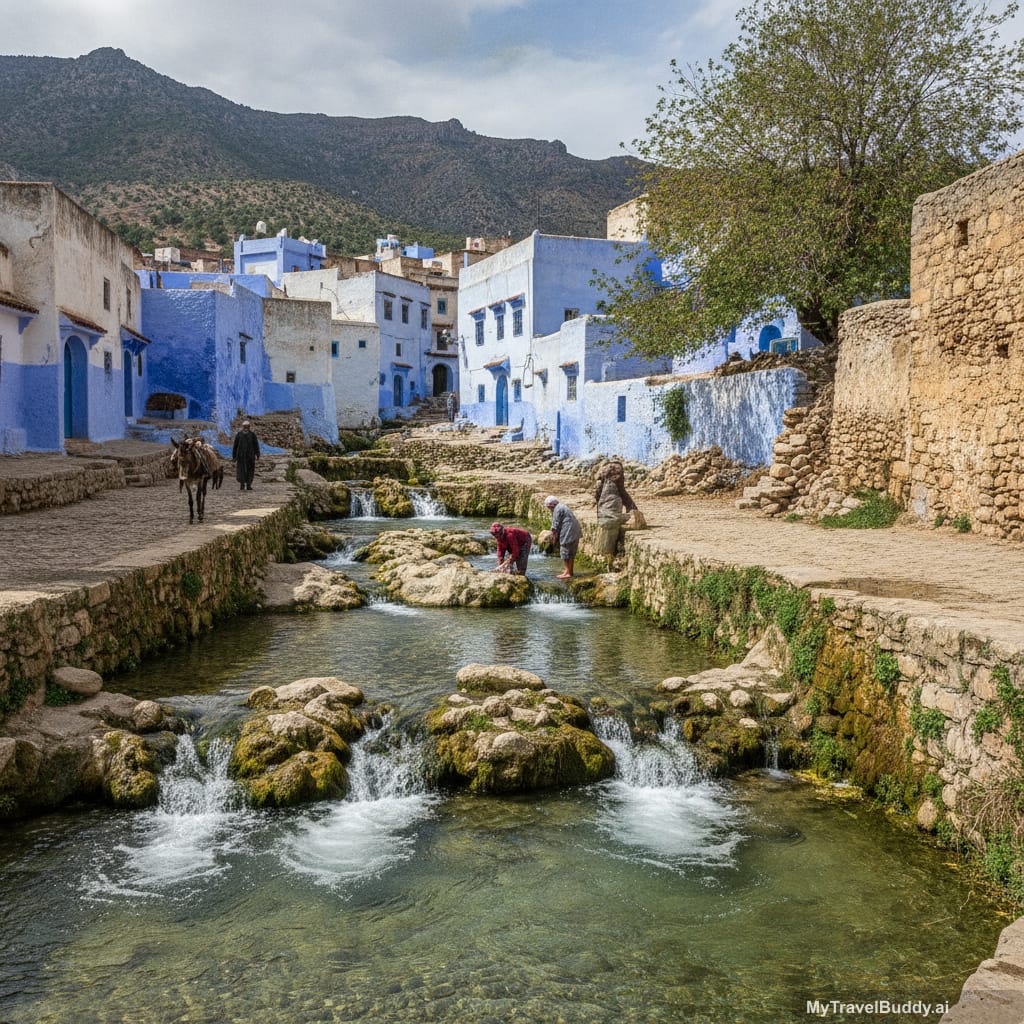
From the medina, drift toward Ras El Ma, the spring at the eastern edge of the old town. Google Places currently lists it as a compact natural spring area where local residents have traditionally done washing, and that small detail matters. Ras El Ma is not only a scenic stop. It is part of the town's daily life.
The walk from Plaza Uta el Hammam through the kasbah area and on toward Ras El Ma is short, but the slope, turns, shopfronts, and pauses make it feel like a proper transition. The blue lanes begin to open. The sound of water grows clearer. The mountains feel closer. If the spring is busy, stand back. Let residents use the space. Let other travelers pass. Take the photo after you have understood what you are looking at.
Water changes Chefchaouen's mood. The medina can feel enclosed and theatrical; Ras El Ma loosens it. You are still close to the old town, but the day has started leaning toward the hillside.
Save the Spanish Mosque for Late Light
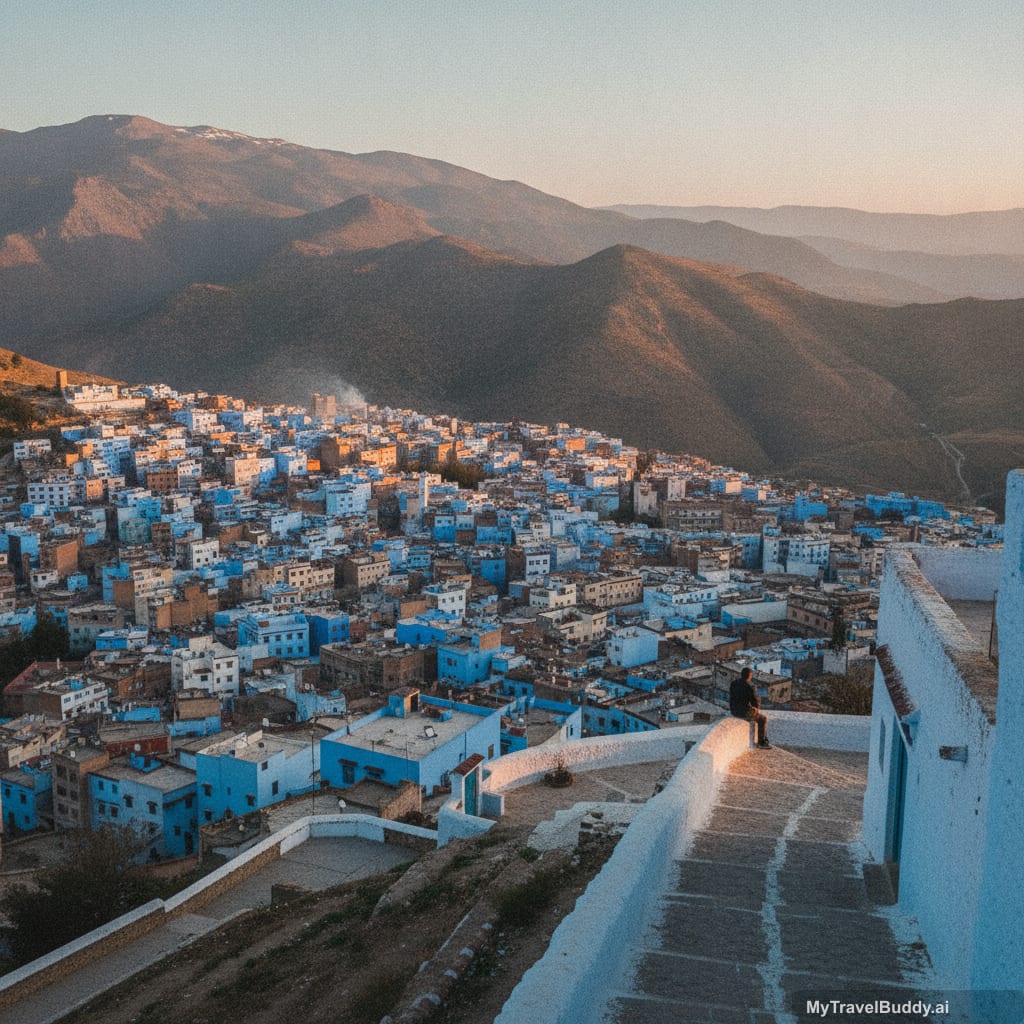
The Spanish Mosque, often mapped as Bouzafer Mosque, sits on the hillside east of the medina. It is the classic Chefchaouen viewpoint for a reason: from above, the blue town gathers into a bowl of color against the mountains, and the surrounding landscape finally explains why the streets feel so steep.
From the medina/Ras El Ma side, the walk up is commonly treated as a short but real climb. The route I checked from Plaza Uta el Hammam through Kasbah Chefchaouen and Ras El Ma to the viewpoint is about 1.7 kilometers, with roughly 31 minutes of walking before stops. That estimate should be treated as a baseline, not a promise. Heat, crowds, uneven steps, and your appetite for photographs can all stretch it.
Go in comfortable shoes. Bring water. If the afternoon is hot, wait. Sunset is popular, so arrive early enough to settle without scrambling for the edge of the view. Be especially respectful around the mosque itself. The viewpoint is public-facing, but it is still a religious structure, not a viewing platform built only for visitors.
This is where the blue becomes geographic. From below, you saw doorways, shops, fountains, and steps. From above, you see the shape of the town: medina, plaza, kasbah, spring, hillside, road, mountains. The morning turns into a map.
A Gentle One-Day Route
Begin at Plaza Uta el Hammam with coffee or mint tea and a slow look at the square. Visit Kasbah Chefchaouen if current hours and access work for your day, or use the exterior as a historical anchor before entering the surrounding lanes.
Spend the middle of the morning wandering the blue medina without chasing every photo. Focus on texture, craft, light, and respectful distance from private homes.
Pause for tea or lunch before the day gets hot. Chefchaouen is more pleasant when you let stairs and weather shape the pace.
Walk toward Ras El Ma, leaving room for the spring to be both scenic and local. Continue up toward the Spanish Mosque viewpoint for late afternoon or sunset if your legs, shoes, and weather agree.
Return before the lanes feel too dark or too crowded for comfort, especially if you are not staying inside the medina.
Practical Notes
Chefchaouen is in northern Morocco's Rif Mountains. Many travelers reach it by road from Tangier, Tetouan, or Fes, often by bus, private transfer, rental car, or tour depending on the wider itinerary. Schedules, road times, and station details can change, so check current transport before building a tight arrival day.
The old town is walkable but steep in places. Wear shoes with grip, carry water, and treat stairs as part of the experience rather than an inconvenience.
Dress and behave with local norms in mind. Morocco is diverse and hospitable, but modest clothing and thoughtful photography habits are good travel manners, especially near homes and religious sites.
For the kasbah, museum access, guided tours, and local activities, verify current hours and prices before committing. For the Spanish Mosque viewpoint, check conditions before climbing at dusk and bring a small light for the return if needed.
Chefchaouen is famous because of the blue. It stays with you because the blue belongs to a real town.
Move slowly enough to remember both.
Research Notes
Place names and coordinates were checked with Google Places for Plaza Uta el Hammam, Kasbah Chefchaouen, Ras El Ma, and Bouzafer Mosque/Spanish Mosque viewpoint. A Google Routes walking check put the plaza-to-kasbah-to-Ras-El-Ma-to-viewpoint route at about 1.7 kilometers and 31 minutes before stops. Practical claims about transport, hours, access, and local conditions are intentionally flexible because they can change.
Continue wandering
One more story for the road
October 11, 2026 · Maya Roam
Seoul's North Ridge, East to West
Almost everyone walks the Baegak section of the Seoul City Wall from Changuimun, which means climbing 200 metres of staircase in the first kilometre and finishing at a road junction. Walk it the other way and the climb arrives in instalments and the mountain ends in Buam-dong with a coffee.
Read nextInspired to go?