
Travel story 8 min read
MyTravelBuddy Stories
Your First Night Near Cusco Belongs in Urubamba
Flying into Cusco and sleeping there is the most common way to lose the first two days of a Peru trip. Go down to the Sacred Valley instead — about 460 metres lower — and climb by day. Here is the arrival drive, the Mar…
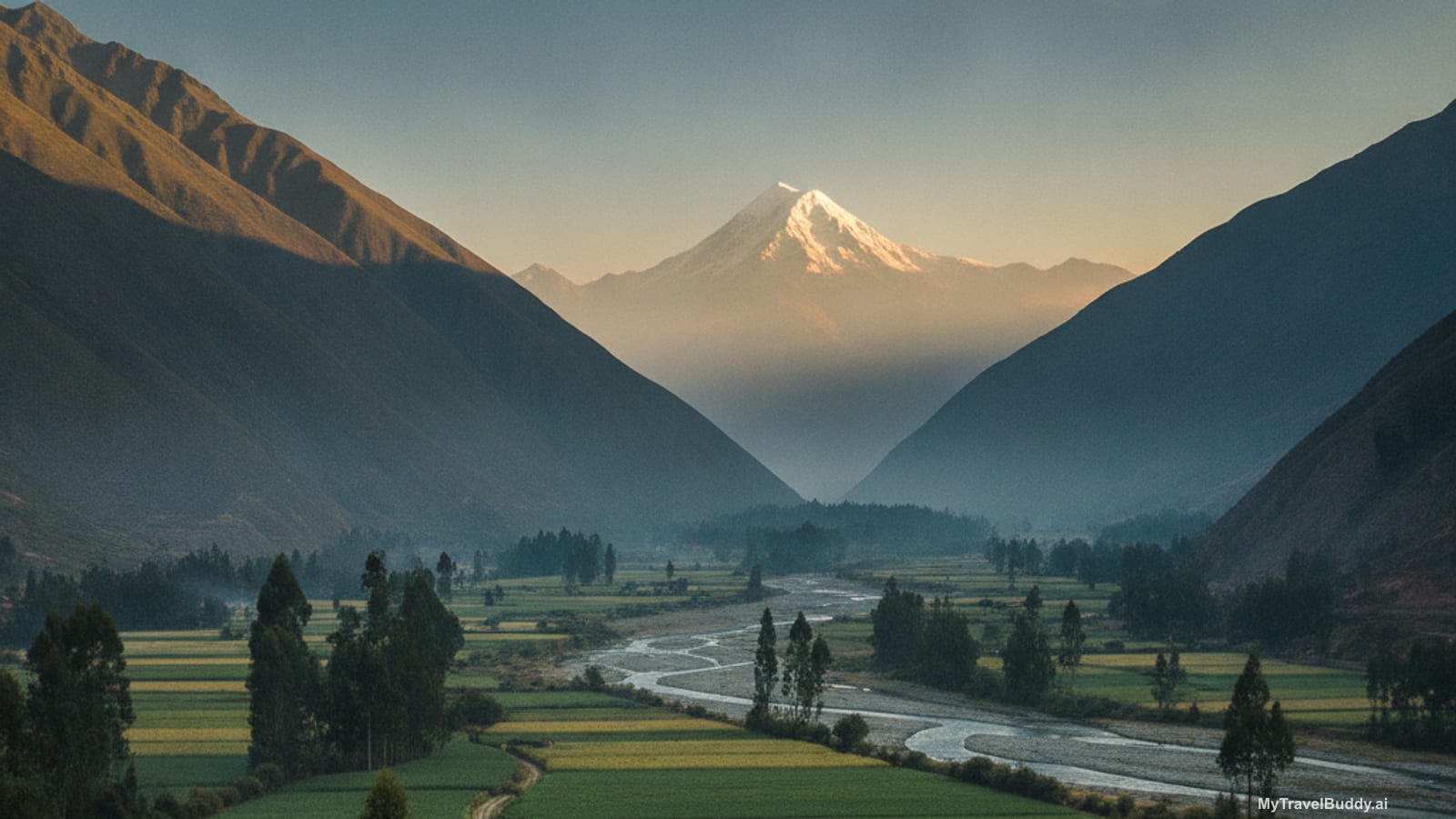
Everyone lands in Cusco the same way. The plane drops through a gap in the mountains, you walk out of Alejandro Velasco Astete with your bag, and a taxi takes you twenty minutes uphill into a city at about 3,400 metres. Then you spend your first two days in Peru lying in a hotel room with a headache, drinking coca tea, wondering why the trip you planned for a year feels like the flu.
There is a better move, and it is almost comically simple: get in the car at the airport and go down.
Urubamba, in the middle of the Sacred Valley, sits at about 2,880 metres — roughly 460 metres below Cusco. Ollantaytambo, at the valley's western end, is a touch lower still, around 2,850. That is not a trivial difference at this elevation. It is the difference between a first night where you sleep badly and a first night where you sleep. Medical guidance for staging an ascent says to climb high and sleep low, and the Sacred Valley is the rare place where the low option is also the beautiful one.
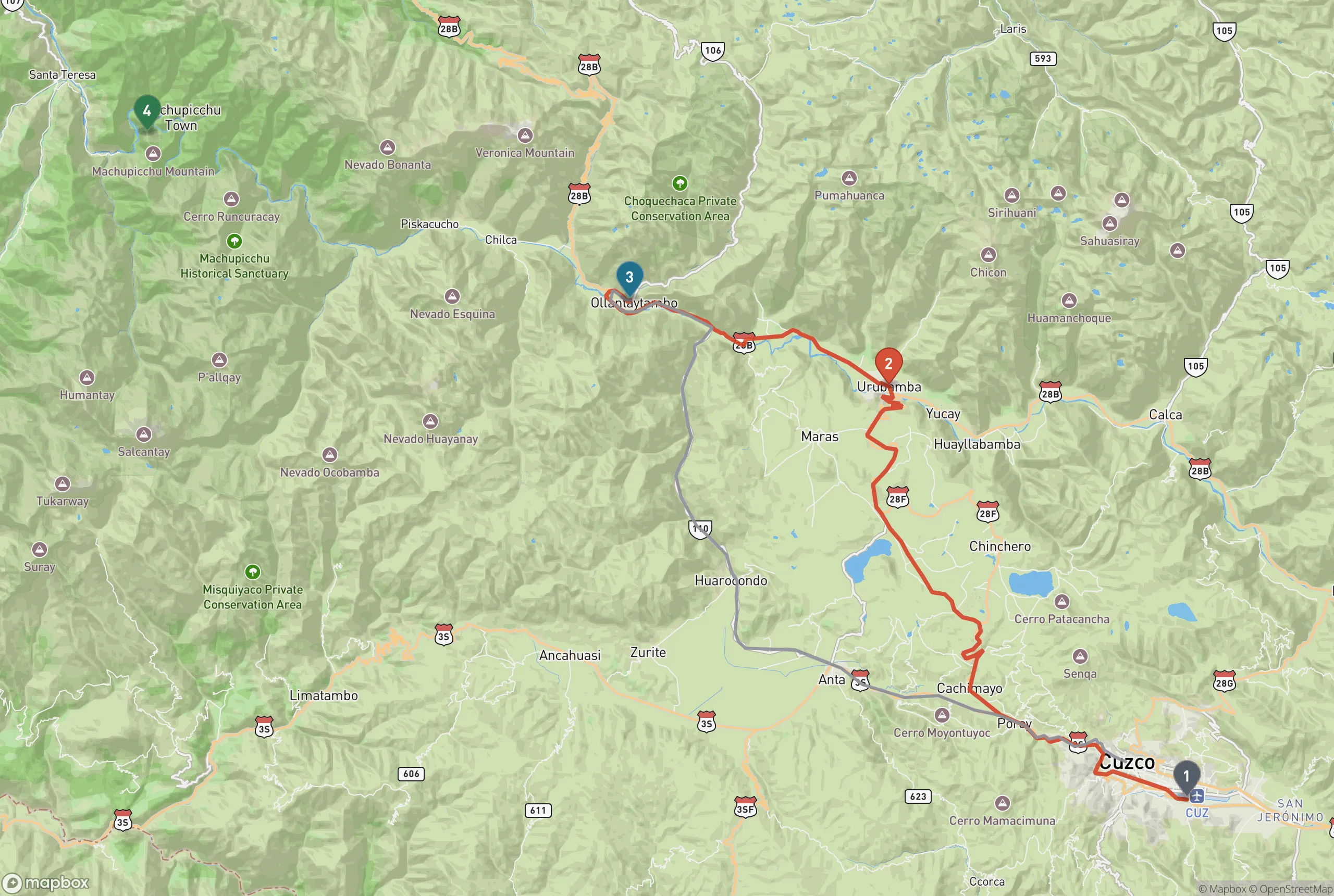 1 Cusco airport (CUZ). 2 Urubamba. 3 Ollantaytambo. 4 Machu Picchu. The red line is the arrival drive — about 56 km and an hour and a half.
The drive you should book before you fly
From the airport, the road to Urubamba runs 56 km and takes around an hour and a half, climbing first over the Chinchero plateau — which is higher than Cusco, about 3,730 metres, and where the view suddenly opens onto the whole snow line — before dropping steadily into the valley. You will feel the plateau. Thirty minutes later you will feel it leave you.
Arrange this transfer in advance rather than negotiating at the terminal with a headache. Most Sacred Valley hotels will send a driver; it is the single most useful thing they do. If you are travelling cheaply, shared colectivo vans run to the valley from the Pavitos area in central Cusco, but that means going up into the city first and then back down, which defeats the point on arrival day. Save the colectivos for later in the trip, when you are acclimatised and they are genuinely the best way to move around — they leave when full, cost a few soles, and the Urubamba–Ollantaytambo leg takes about 40 minutes over 23 km.
Day one: do nothing, on purpose
The temptation on arrival day is to "just see one ruin." Don't. Altitude does not care about your itinerary, and the symptoms usually arrive six to twelve hours after you do — which is to say, at bedtime.
Instead: the Mercado de Urubamba opens at five in the morning and runs to about six in the evening, and an hour there is the best orientation in the valley. It is a working market, not a souvenir one. Buy fruit you cannot identify. Walk the four blocks to the Plaza de Armas. Sit. Drink more water than feels reasonable — the air here is dry as well as thin, and dehydration does a convincing impression of altitude sickness.
Eat early and lightly. El Huacatay, a few minutes from the plaza, opens at 12:30 and serves until eight; it is a garden restaurant and the kind of place where a slow two-hour lunch is the correct use of an afternoon. Heavy food and alcohol on night one are a bad trade.
Sunset in early October is around 5:45 p.m. and the temperature falls fast once the light goes off the valley walls — daytime highs in the mid-twenties Celsius collapse to single digits overnight, occasionally close to freezing in the first week of the month. Valley hotels are often unheated. Ask about blankets before you need them.
Day two: the plateau loop, then back down to sleep
Now you can climb — as long as you come back down at night. This is the whole logic of basing in the valley.
The Maras and Moray loop is the right second day. The salt pans at Salineras de Maras sit about 18 km from Urubamba, roughly half an hour by road, and are open from six in the morning to six at night: thousands of shallow terraced evaporation pools stepped down a ravine, worked the same way since before the Inca. Moray, the concentric agricultural terraces on the plateau, is another 17 km and about half an hour onward, open 07:00 to 18:00. Both are above 3,000 metres, which is the point — you spend the day high and sleep low, and that is exactly what your body wants.
Go in the morning. Early October is the hinge between Cusco's dry season and its wet one, and the pattern is reliably "clear mornings, building afternoons." The first few days of the month can still come in completely dry; by the second week the afternoon rain probability for the valley climbs past 80 per cent on most days. A morning at the salt pans and an afternoon back in Urubamba is not a compromise, it is the correct order.
If you would rather go the other direction, Pisac is 47 km east — about an hour and fifteen — with the archaeological park open 08:00 to 16:30 and the artisan market from nine to five. It is a longer day than it looks on a map, because the valley road is slow.
Day three: Ollantaytambo, and the train
Move down the valley on your third day and stay in Ollantaytambo, not back up in Cusco. The town itself is the best-preserved Inca street grid still lived in, water running in the channels, and the archaeological site above it opens at 07:00 and closes at 17:00. Go at opening. The terraces face east and the first hour has both the light and the silence; by ten the morning tour buses from Cusco arrive en masse.
The station is a separate thing from the town — about 2.4 km from the main square, a half-hour walk or a very short taxi. Trains to Machu Picchu run from early morning; the first departures are around 4:15 a.m. if you want them. Factor that walk into your alarm, not into your optimism.
Machu Picchu itself sits at about 2,430 metres, and Aguas Calientes, the town below it, at around 2,050 — lower and warmer than anywhere else on this trip, in the high twenties by day. It also rains there far more than it does in the valley: in early October the daily rain probability at Aguas Calientes is near 100 per cent most days even when Urubamba is dry. Bring the rain shell you were tempted to leave behind. The citadel's entry runs 06:30 to about 15:45, with timed entry on fixed one-way circuits — book through the official Ministry of Culture portal well ahead, and confirm current prices and circuit rules there rather than trusting any secondhand number, including this one.
Then, finally, Cusco
Come back up at the end, not the beginning. By the time you return — Ollantaytambo to Cusco is 62 km and close to two hours by road — you will have spent several nights between 2,800 and 2,900 metres and several days above 3,000. Cusco at 3,400 will feel like a city rather than an ordeal, which is what it deserves to be. Qorikancha opens 08:30 to 17:30, Saqsaywaman from 07:00, and you will actually want to walk up to it.
The cost of this plan is one extra transfer and a slightly odd-looking itinerary. The return is that you get your first three days back.
What to pack for this specific sequence
- Layers for a 20-degree daily swing. Mid-twenties at noon, low single digits at dawn, every day, in the same valley.
- A real rain shell, not a packable one. For Machu Picchu rather than the valley — the two have completely different Octobers.
- Sun protection that assumes no clouds. At 2,900 metres the morning sun is severe even when the air is cold.
- More water bottles than you think. The dry air is the under-reported half of altitude.
- Cash in small soles. Colectivos, market stalls and the salt pans do not want your card.
One last thing: if your symptoms get worse instead of better after a night of rest, or you get confused, breathless at rest, or unsteady on your feet, that is not something to sleep off. Go down further and get seen. The valley makes that easy — which, again, is the argument for being in it.
Continue wandering
One more story for the road
September 30, 2026 · Maya Roam
Enter Petra by the Back Door, Leave Through the Siq
Almost everyone walks into Petra through the Siq at nine in the morning. Start at Little Petra instead, arrive at the Monastery from above, walk down through the city, and meet the Treasury at four — with the trail dist…
Read nextInspired to go?