
Travel story 8 min read
MyTravelBuddy Stories
Sixteen Days Without the Landwasser Viaduct
From 29 October to 13 November the Rhaetian Railway closes the Albula line between Thusis and Preda, and the most photographed bridge in the Alps goes silent. What still runs, what the Bernina Express loses, and the dry three-week window that is still open.
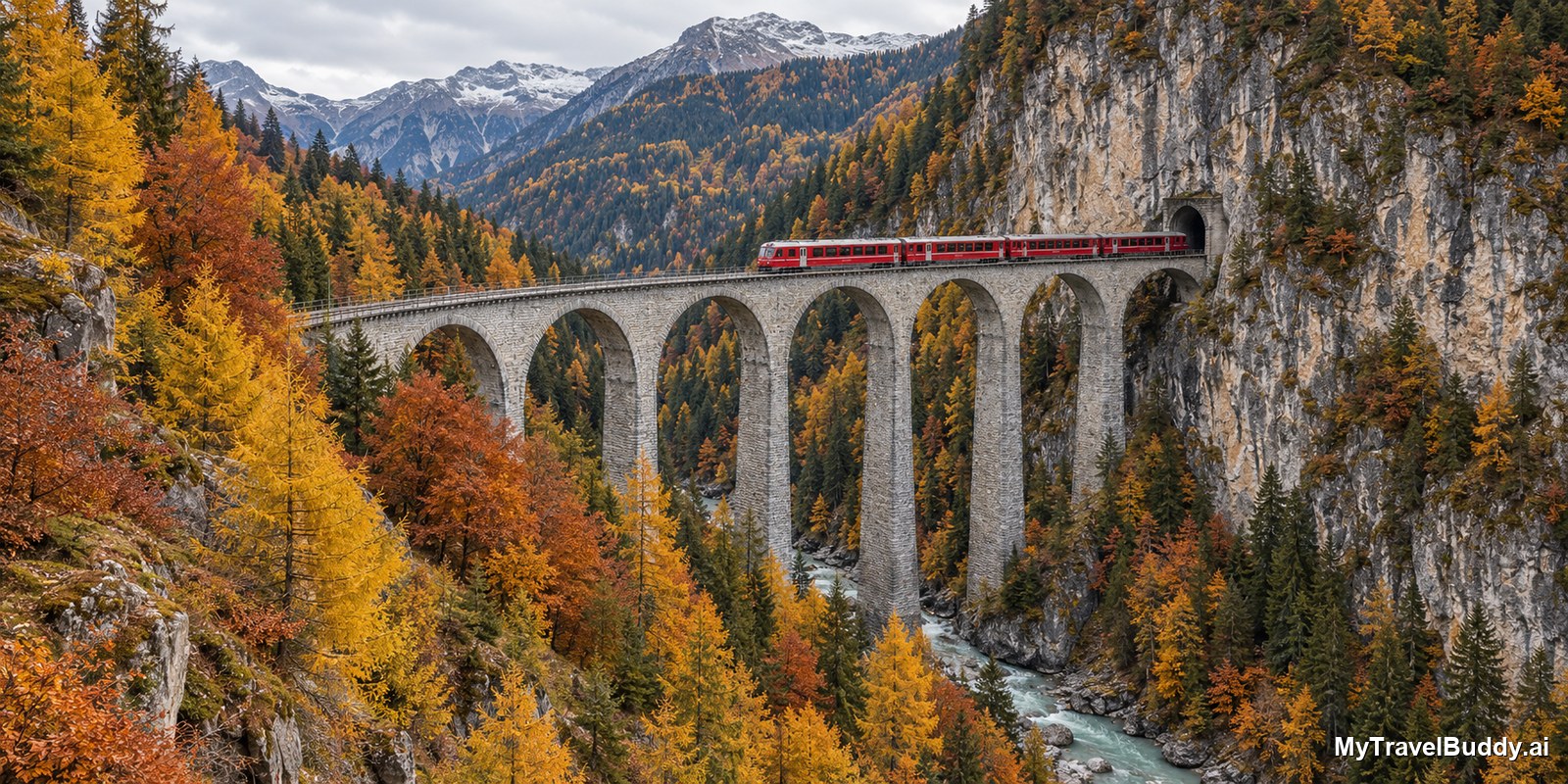
There is a photograph you have almost certainly seen without knowing where it was taken. A red train, six grey arches on a curve, and a tunnel mouth punched straight into a vertical cliff on the far side, as if the bridge had been built to deliver trains into solid rock. That is the Landwasser Viaduct, just outside Filisur in the Swiss canton of Graubünden, and for sixteen days starting on Thursday 29 October it will have no trains on it at all.
Not fewer trains. None. The Rhaetian Railway is closing the Albula line between Thusis and Preda from 29 October to 13 November 2026 to rebuild the trackbed inside the Tuoa tunnel, and the Landwasser Viaduct sits inside that closed section. Buses replace the trains. The famous bridge stays standing, beautifully, in total silence.
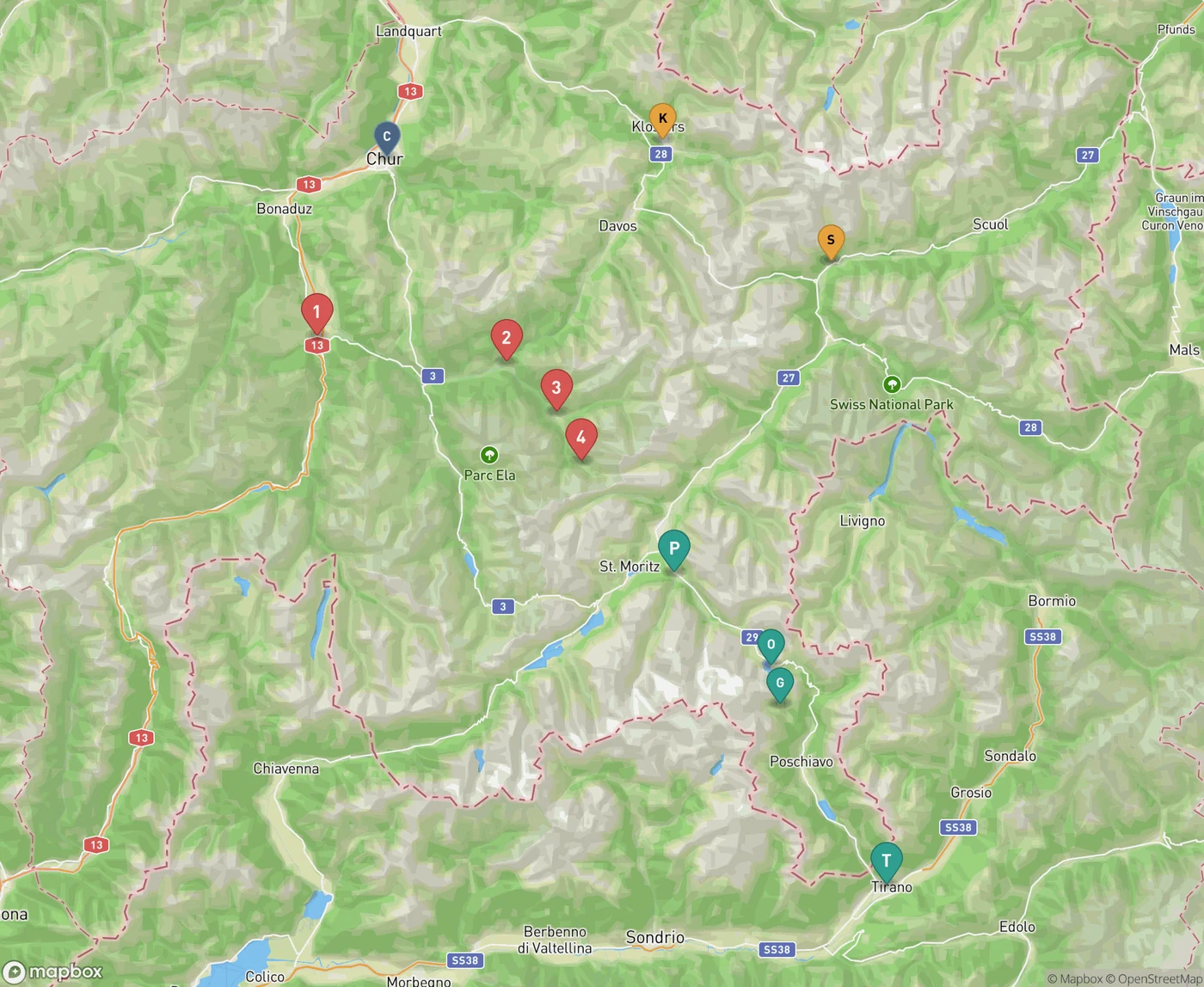
Red: the Albula section that closes 29 October to 13 November. Orange: the Vereina diversion. Teal: the Bernina line, unaffected.
What is actually closing, and what is not
It is worth being precise here, because the headlines will flatten this into "the Bernina Express is cancelled," and that is not what is happening.
Two separate things are true at once. The Albula line is shut between Thusis and Preda — that is the stretch with the Landwasser Viaduct, the Solis gorge, and the spiralling climb through Bergün. And the Bernina Express trains 951 and 952 are being diverted via Vereina, running Chur – Landquart – Klosters – Vereina Tunnel – Sagliains – Pontresina instead of over the Albula. Rhaetian Railway lists both, with the same dates.
So the Bernina Express still runs. It still crosses the Bernina Pass, still passes Lago Bianco at 2,253 metres, still slips down past Alp Grüm and loops through the Brusio circular viaduct before it reaches the palm trees in Tirano. The southern half of the journey — the half most people book it for — is untouched.
What you lose is the first half. The diverted train trades the Albula's viaducts and helical tunnels for the Vereina, which is a long, dark, impressively engineered hole in the mountain. Useful, not scenic.
And here is the part that catches photographers out: when a line is fully closed, nothing crosses it. During those sixteen days the Landwasser Viaduct is not merely unridable. It is unphotographable, at least in the version you came for. You can walk to the viewpoint and look at a very handsome empty bridge.
The window that is still open
Today is 10 October. The line runs normally until Wednesday 28 October, which gives you a little under three weeks — and the forecast for most of it is unusually kind.
Open-Meteo's current outlook for the Albula valley shows essentially no precipitation between 11 and 24 October, with Filisur climbing from highs around 12 °C early in the period to 20–22 °C over the weekend of 22–24 October. Up at Ospizio Bernina the model sits at 5–15 °C by day and dips below freezing at night from about 19 October. Down in Tirano, 430 metres above the sea and on the Italian side of the pass, the same week is forecast at 24–28 °C. That spread — frost at the top of the pass, shirt-sleeves at the bottom — is the whole point of this railway, and late October is when it is most extreme.
Two caveats, because forecasts two weeks out are a direction of travel, not a promise. The models show a hard break around 25 October, with overnight lows at Ospizio Bernina falling towards −11 °C. And European clocks go back on Sunday 25 October, so valley sunset drops from about 18:15 to roughly 17:15 overnight. If you want afternoon light on the Albula half, the weekend of 17–18 October or the long dry stretch mid-week after it are the safer bets.
Take the regional train, not the famous one
This is the advice I would give even without a closure.
The Bernina Express and the ordinary regional trains run on the same rails, past the same lake, through the same viaduct. The difference is the carriage and the paperwork. The Bernina Express needs a valid ticket plus a compulsory paid seat reservation, and it sells out well in advance. Regional trains run to the regular timetable with far more departures through the day; reservations exist only on the St. Moritz–Tirano section, they are voluntary, and Rhaetian Railway prices them at CHF 5 per person per leg.
The regional carriages have one advantage the panoramic cars physically cannot offer: the windows open. On the panoramic coaches the glass curves up over the roof, which is spectacular and also a mirror. If you intend to photograph anything, this matters more than legroom.
One more thing worth knowing before you book through a third party. Rhaetian Railway itself warns that resellers often translate the regional service as "Bernina Express," and that "Trenino Rosso" or "Bernina Red Train" almost always means the regional train. If a reseller's price looks high for what is described, check which train you are actually buying.
From late October the winter timetable takes over and the Bernina Express thins out considerably — roughly one Chur–Tirano pair a day rather than the summer frequency. The regional service barely changes. Another quiet argument for the slow train.
If you go before the 29th: Filisur and Bergün
Filisur is the stop for the viaduct, and the walk is genuinely easy. From the station platform it is about 2.8 km to the vantage point above the bridge — around 36 minutes on foot, mostly on a track along the valley floor before a short climb. There is a purpose-built viewing platform at the end of it, and the whole thing is doable in the gap between two regional trains if you time it against the timetable rather than hoping.
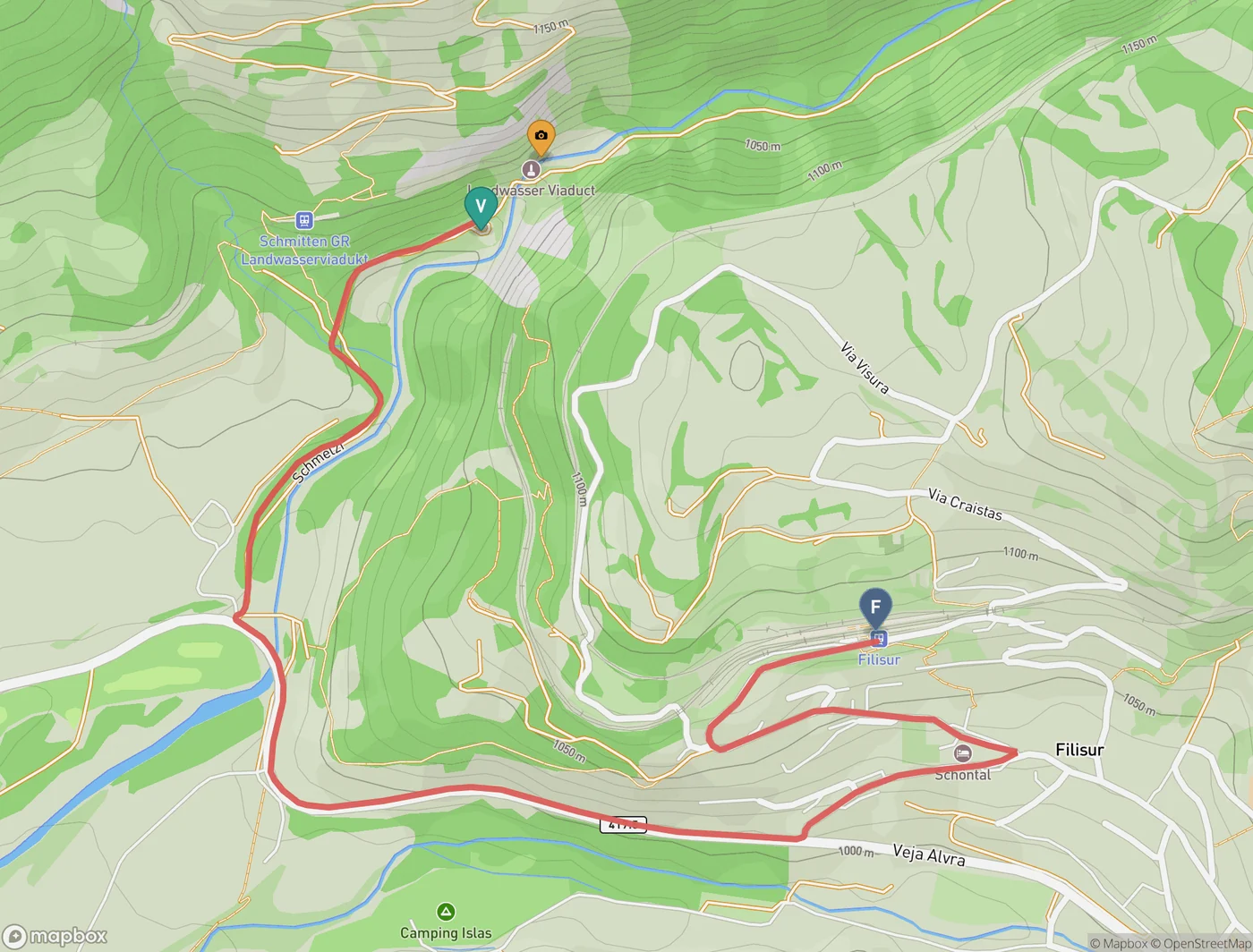
Filisur station to the viaduct viewpoint: 2.8 km, about 36 minutes each way.
Four stops further up the climb, Bergün is the better place to actually stop. The Bahnmuseum Albula — the railway's own museum, and a far more charming thing than that phrase suggests — is 54 metres from the station exit, listed as open 10:00 to 17:00 daily. It exists because this line is a genuine engineering marvel, and the museum is the only way to understand what you just rode through: the loops, the spirals, the gradient that gains 400 metres between Bergün and Preda while travelling barely 5 km as the crow flies.
If you are driving instead, Thusis to Preda by road is about 38 km and 50 minutes in normal conditions. That is also, roughly, the corridor the replacement buses will follow from 29 October — so if you are travelling during the closure, budget well over an hour for a section the train does in about forty minutes, and more at school-run times.
If you go during the closure: go south
The honest answer is that 29 October to 13 November is a fine time to be in the Engadine and a poor time to be on the Albula. So plan around it.
The closure runs Thusis–Preda only. Preda to Samedan is unaffected, and the entire Bernina line — Pontresina, Ospizio Bernina, Alp Grüm, Poschiavo, Brusio, Tirano — runs its normal timetable throughout. Base yourself at the Engadine end rather than trying to arrive over the Albula, and the trip you actually wanted is still intact.
Getting in is the only puzzle. From Zurich or Chur, the Vereina route via Klosters is the rail option, and it is the one the diverted Bernina Express uses. By car, the road equivalent from Klosters to Sagliains is the Flüela Pass — 22 km, about 45 minutes — which is precisely why the Vereina car-shuttle tunnel exists, because the Flüela is not a winter road.
A note on the mountains above the line, since people combine the two. Corvatsch's published summer operation ended on 16 October; Diavolezza lists an autumn operating period of 17 October to 15 November; Muottas Muragl is advertised with an autumn special from 26 October to 1 November. Between the end of hiking season and the start of skiing, Engadine lifts open and close on their own calendars rather than a shared one. Check the operating dates for the specific mountain on the specific day before you build an afternoon around it.
What I would actually do
If the dates are flexible: go in the week of 19 October. The forecast is dry, the larches are gold, the Albula is open, the clocks have not changed yet, and the Bernina Express is still running its fuller timetable while being perfectly skippable in favour of a CHF 5 reservation on a regional train with windows that open.
If the dates are not flexible and they land inside the closure: fly or train into the Engadine via Klosters, stay in Pontresina or Poschiavo, and ride Pontresina–Tirano and back on the regional service. Go down to Tirano for lunch, where it will be fifteen degrees warmer than where you got on, visit the basilica by the station, and come back up in the dark. You will not have crossed the Landwasser Viaduct. You will have had the better half of the day anyway.
And if you only care about the bridge, there is no substitute and no workaround: ride it before Wednesday 28 October, or wait until 14 November, when the trains come back.
Dates and engineering works are as published by Rhaetian Railway and the Swiss public tender for the replacement bus service as of 10 October 2026; weather figures are Open-Meteo forecasts, not guarantees. Timetables shift — confirm your specific train on the day you travel.
Continue wandering
One more story for the road
October 9, 2026 · Maya Roam
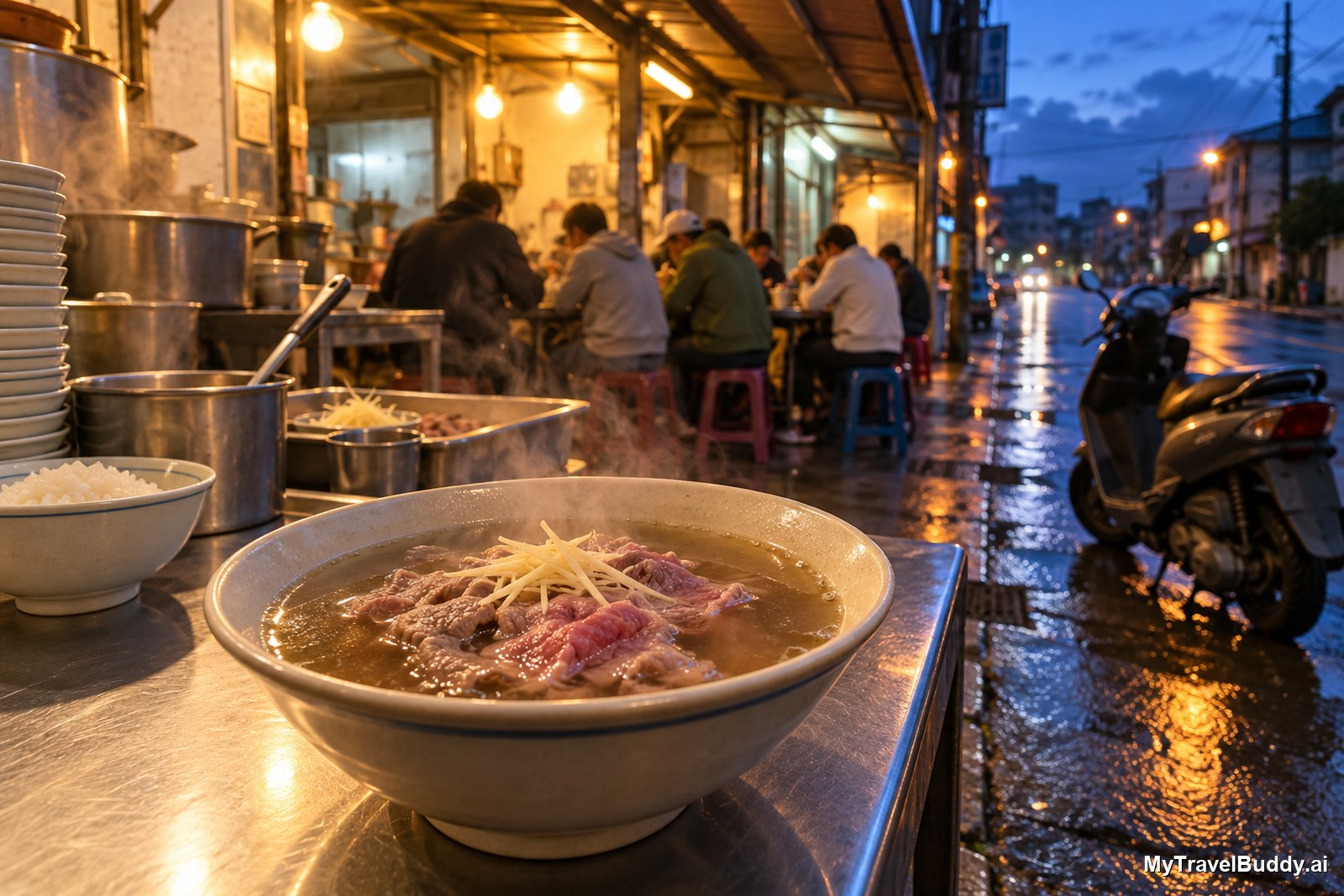
Tainan's Famous Beef Soup Is Open 24 Hours a Week
Tainan's most celebrated beef soup is served 5am to 11am, Thursday to Sunday - twenty-four hours a week. The clock isn't a gimmick, it's the dish. A dawn walking loop, the closure days nobody warns you about, and what October really feels like.
Read nextInspired to go?